Which iPhones Support iOS 27's New CarPlay Features?
Apple's iOS 27 update introduces Siri AI and video apps to CarPlay. However, these advanced automotive features require specific iPhone hardware to function on your dashboard.
· 10 min read
This article was generated with AI from the sources it names. Report an error
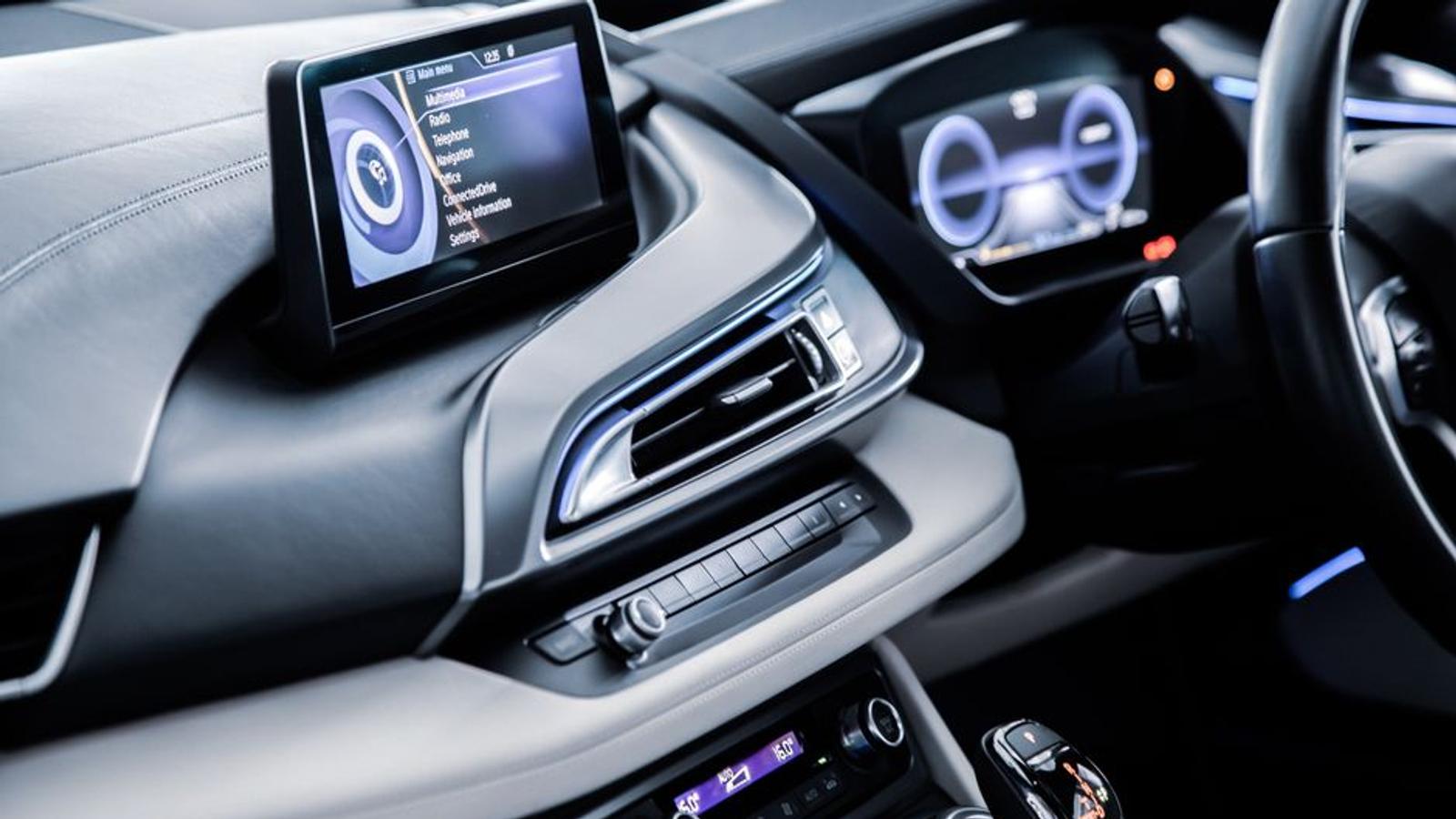
Apple's rollout of iOS 27 brings substantial upgrades to the in-car software experience, expanding CarPlay from a mirrored audio interface into a sophisticated platform with deeper vehicle integration. Unlike native operating systems built directly into automobiles, CarPlay relies on the connected iPhone's processor to render graphics, calculate route data, and process driver commands. As a result, the capabilities available on an in-dash screen are tied to the specific hardware tier of the driver's phone.
While the baseline software update introduces refined interface elements to a broad range of devices, more demanding features are gated behind high-performance silicon. Drivers will find that access to intelligent voice assistance, integrated navigation data, and parked media playback depends on their device generation, vehicle manufacturer support, and regional regulatory frameworks.
Core System Requirements and Baseline iPhone Compatibility
The fundamental cutoff for the update begins with device architecture. Apple restricts the complete iOS 27 operating system to the iPhone 11 and later models, dropping compatibility for earlier generations. Devices such as the iPhone X, iPhone XR, and iPhone XS cannot install the new operating system, leaving them strictly running legacy iterations of CarPlay without access to new visual or performance updates.
For eligible handsets from the iPhone 11 through the standard iPhone 14 lineup, updating to iOS 27 delivers immediate platform-level improvements. Apple has stabilized the platform's core infrastructure by refining wireless handshake protocols, reducing latency, and mitigating random disconnections. Furthermore, enhanced GPS location reporting allows compatible iPhones to share positioning tasks with the vehicle's external antenna for superior positioning accuracy in dense urban corridors.
Owners of these baseline devices also receive aesthetic and interface upgrades across the dashboard. The update adds dynamic, high-resolution automotive wallpapers designed to complement modern cabin illumination. A persistent mini-player keeps transport controls accessible regardless of which app occupies the primary screen, ensuring that navigation maps do not have to be dismissed to pause or skip audio.
Media handling is further expanded by an overhauled Now Playing interface that improves usability on capacitive touch displays. In addition to larger album artwork and clear metadata, the media player incorporates a swipeable progress bar. This visual scrubbing tool enables drivers or passengers to seek through audio tracks and podcasts directly from the console without ever having to unlock the physical iPhone.
The Hardware Divide: Apple Intelligence and Siri AI
Despite the broad availability of standard visual updates, the centerpiece of the update—an overhaul of Siri powered by device-level artificial intelligence—is restricted to higher-end hardware. Running generative language models on-device requires high-bandwidth neural processing and substantial unified memory. Consequently, Siri AI in CarPlay requires an iPhone 15 Pro, an iPhone 16, or a later model to function.
Older devices, including the baseline iPhone 14 and standard iPhone 15 models, do not meet the minimum hardware processing specifications for on-device machine learning. Drivers connecting these devices to a vehicle will continue to interact with the traditional, command-driven Siri interface. While classic Siri still sets alarms, handles basic messaging, and initiates calls, it lacks contextual comprehension and advanced conversational reasoning.
When powered by an iPhone 15 Pro or iPhone 16, Siri AI significantly transforms in-car assistance by synthesizing personal context across multiple applications. The assistant can parse incoming emails, conversational threads in Messages, and calendar entries to identify real-world destinations. If a friend mentions a newly opened bistro in a text thread, the driver can prompt Siri to route to the recommended establishment without citing its specific address.
Natural language understanding also extends directly into route management and cabin commands. Instead of relying on rigid, predetermined phrases, drivers can issue complex driving requests such as instructing Apple Maps to avoid tolls or navigate around heavily congested highway junctions. Siri AI interprets these conversational directives instantly, adjusting active waypoints without requiring manual screen input while driving.
Regional Gating and the European Union Restriction
Hardware capability is not the sole factor governing the availability of next-generation voice intelligence on the dashboard. Even if a vehicle owner pairs an iPhone 15 Pro or iPhone 16 running iOS 27, Siri AI features are entirely disabled within the European Union. Regulatory frameworks surrounding data privacy and competition have delayed the introduction of Apple's advanced AI toolset across member states.
For European drivers, the CarPlay interface defaults to the legacy voice assistant engine, regardless of the smartphone connected. Navigation searches must rely on standard keyword inputs, and personal context parsing across third-party applications remains strictly locked down. Apple has not outlined a definite timeline for addressing regulatory compliance in the region, leaving European motorists with standard baseline improvements.
Drivers traveling across borders will observe immediate changes in the operating characteristics of their vehicle's voice interface. An iPhone purchased and configured in an eligible territory will automatically restrict advanced neural processing when geolocated inside an EU jurisdiction. This deliberate partitioning highlights how automotive software experiences are increasingly subject to regional digital compliance mandates.
Outside the European Union, standard localization requirements apply, requiring specific system language and keyboard settings to access on-device models. Motorists must ensure their device language and regional parameters are aligned with Apple's supported list to engage the intelligent assistant. Any divergence in regional configuration prompts CarPlay to fall back onto its conventional remote-server processing structure.
In-Cabin Video Playback and Manufacturer Adoption
Another significant development in iOS 27 is the native integration of video streaming applications directly into the CarPlay dashboard. Historically limited to audio output, the platform now accommodates major entertainment streaming services including YouTube and Netflix. This feature turns vehicle touchscreens into functional multimedia centers, accommodating users who spend time idling or waiting inside their vehicles.
Hardware ownership alone does not automatically unlock in-dash video playback. Vehicles must possess manufacturer-implemented software support specifically adapted for the iOS 27 video framework before streaming applications can populate the interface. Automakers must actively update their infotainment head units to acknowledge Apple's video handshake protocol, meaning older vehicle models may require formal dealership firmware upgrades.
Safety engineering dictated strict constraints on how video feeds operate inside the vehicle. CarPlay allows full-motion video playback solely when the vehicle's transmission is placed in park and the emergency brake is engaged. The operating system utilizes telematics data from the vehicle bus to continuously verify movement status and prevent driver distraction during transit.
If the vehicle's sensors detect any forward or reverse motion, the system triggers an instantaneous safety override. The video feed immediately blacks out, and the active application switches strictly to audio-only streaming over the car's sound system. This fail-safe architecture satisfies global vehicle safety standards while still offering entertainment options during roadside stops or recharging periods.
Bi-Directional Navigation and Electric Vehicle Routing
Navigation functionality sees deep architectural enhancements in iOS 27 through bi-directional data pipelines established between the smartphone and the car. Previously, navigation apps operated largely as independent overlays, receiving GPS coordinates but rarely communicating real-time routing telemetry back into the vehicle's integrated instrument cluster or powertrain management systems.
Under the new framework, navigation platforms such as Apple Maps and Google Maps transmit intricate route data directly to the vehicle's onboard computers. The vehicle can evaluate incoming topographical data, current traffic metrics, and estimated arrival times against its current fuel or battery levels. This shared computational workload leads to substantially more reliable range estimates and predictive travel calculations.
This continuous data exchange delivers critical benefits for electric vehicle (EV) operators navigating dynamic charging networks. By analyzing power consumption alongside active navigation routes, iOS 27 allows the vehicle to recommend optimized charging locations based on charger output and stall availability. The navigation engine can dynamically alter the route to incorporate high-speed DC fast chargers if unexpected energy consumption occurs.
Furthermore, the system cross-checks multiple mapping engines to evaluate overall transit timing and energy efficiency. By combining road incline data, ambient weather conditions, and traffic flow, the connected iPhone computes the most energy-conservative itinerary. This continuous feedback loop bridges the gap between third-party smartphone navigation and proprietary in-car range estimation software.
Hardware Tier Comparison and Upgrade Pathways
To understand which automotive features will appear on the dashboard, vehicle owners must categorize their equipment across distinct technological brackets. The lowest tier comprises discontinued handsets, specifically the iPhone X series, iPhone 8, and older models. These devices cannot install iOS 27 and will retain static, legacy CarPlay implementations without receiving any interface refreshes or navigation advancements.
The second tier encompasses the standard iPhone 11, iPhone 12, iPhone 13, and baseline iPhone 14 families. These smartphones support iOS 27 and provide the modernized user interface, dynamic wallpapers, persistent mini-player, and the interactive Now Playing scrubbing bar. They also benefit from the improved GPS stability and more reliable wireless pairing, yet they cannot run local Siri AI models or process deep contextual prompts.
The highest performance tier is currently limited to the iPhone 15 Pro, iPhone 15 Pro Max, iPhone 16 series, and subsequent flagship releases. These devices alone contain the necessary system-on-a-chip processing power and thermal headroom to handle real-time generative intelligence on the road. Drivers utilizing this tier gain the complete iOS 27 feature set, provided their automobile manufacturer supports modern protocols and they reside outside the European Union.
Automobile manufacturers themselves form the final piece of the hardware compatibility equation. While user interface tweaks and Siri interactions process directly through the iPhone, advanced features like parked video streaming and powertrain-linked EV routing demand modern head-unit architecture. Vehicle owners must monitor their car manufacturer's over-the-air firmware release schedules to ensure their vehicle hardware can leverage the connected device's capabilities.
Ultimately, iOS 27 transitions CarPlay from a passive screen projection utility into an integrated driving companion with distinct hardware dependencies. As Apple continues to shift processing loads onto device-side machine learning engines, the differentiation between standard iPhones and pro-tier hardware will increasingly dictate the quality of the connected automotive experience.
Frequently Asked Questions About iOS 27 CarPlay Compatibility
Which iPhone models support iOS 27 and its new CarPlay features?
Apple's iOS 27 update requires an iPhone 11 or newer to run, meaning older models cannot access the updated platform.
Furthermore, advanced Siri AI capabilities on CarPlay require at least an iPhone 15 Pro, iPhone 16, or newer due to processing demands. Models like the iPhone 14 receive interface refinements but lack Siri AI.
Why is Siri AI unavailable for CarPlay users in the European Union?
Even when paired with a compatible iPhone 15 Pro or iPhone 16, Siri AI features are entirely blocked in the European Union.
Apple has restricted access in this territory to comply with local regulatory mandates. Drivers in the EU will still receive visual enhancements, such as new wallpapers and media controls, but no virtual assistant AI.
How do safety limitations affect video playback on CarPlay screens?
CarPlay video streaming requires explicit manufacturer-level software support in the vehicle, alongside an iPhone running iOS 27.
Additionally, video playback operates strictly while the car remains in park. The system automatically switches to an audio-only stream as soon as motion sensors detect the vehicle is driving.
What CarPlay features work on older devices like the iPhone 14?
Yes, devices like the iPhone 14 gain visual updates like the redesigned Now Playing screen, a swipeable progress bar, and fresh wallpapers.
Navigation also improves through route sharing that suggests EV charging stops. However, these handsets lack the hardware power to run Siri AI natural language commands.
Related articles