iPhone Duo vs Xiaomi 18 Fold: How These Foldables Stack Up
The premium foldable market is shifting. We compare the new Apple iPhone Duo and Xiaomi 18 Fold to help you understand their hardware specs, pricing, and global availability.
· 9 min read
This article was generated with AI from the sources it names. Report an error
Introduction: The Passport-Style Foldable Shift
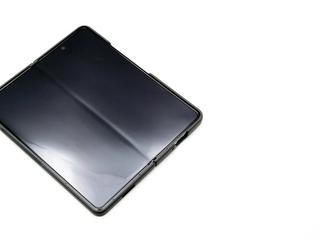
The premium foldable smartphone market reached an inflection point in October 2026 as both Apple and Xiaomi unveiled their respective interpretations of the passport-style foldable format. Departing from taller, narrower cover screens and unusual square internal aspect ratios, both manufacturers have embraced a wider, more practical profile. This structural transition aims to deliver an uncompromised smartphone experience on the exterior alongside an expansive, tablet-grade workspace on the interior.
While Apple positions the iPhone Duo as a globally distributed flagship integrating tightly with the broader iOS ecosystem, Xiaomi approaches the category with aggressive raw hardware specifications at a substantially lower price point. Understanding the core distinctions between the iPhone Duo and the Xiaomi 18 Fold requires analyzing their structural choices, screen capabilities, processing engines, optical setups, battery systems, and software platforms.
Pricing, Release Schedules, and Market Availability
The commercial strategies behind both devices reveal contrasting approaches to global market expansion and pricing boundaries. The Apple iPhone Duo commands an opening price of $1,999, positioning it at the very top of consumer smartphone pricing tiers. Pre-orders commenced on October 16, 2026, ahead of widespread global retail availability on October 23, 2026, ensuring immediate purchase access across North America, Europe, and major Asian territories.
In contrast, the Xiaomi 18 Fold carries an introductory retail price of 10,999 yuan, which converts to approximately $1,640. This substantial price differential of more than $350 gives Xiaomi an immediate value advantage, though its initial release remains strictly limited to mainland China. Prospective buyers outside the Chinese domestic market must rely on specialized grey-market importers, which adds logistical complexity, potential import tariffs, and possible warranty service limitations.
Industrial Design, Materials, and Durability
Material engineering plays a decisive role in the daily usability and survivability of high-end foldable hardware. Apple constructed the chassis of the iPhone Duo around a structural titanium alloy frame coupled with Ceramic Shield glass panels on exterior surfaces. Crucially, Apple secured a complete IP68 certification for the iPhone Duo, offering verified protection against microscopic dust ingress and full water immersion up to standard regulatory depths.
Xiaomi selected an aerospace-grade aluminum chassis for the 18 Fold, complemented by proprietary Shield Glass 3.0 protective panels. However, Xiaomi chose not to publish an official IP ingress protection rating for the handset. This omission leaves outdoor durability under dusty conditions or heavy rainfall unverified by independent standards, even if internal gasket seals offer baseline splash tolerance.
Handheld ergonomics also diverge markedly across the two devices. The Xiaomi 18 Fold weighs in at 219 grams, making it exceptionally nimble for an inward-folding book-style device. The iPhone Duo registers at 254 grams, representing a 35-gram penalty over Xiaomi's construction. This extra weight stems largely from the denser titanium alloy framework, ingress sealing components, and complex hinge stabilizers.
Display Technologies, Brightness, and Crease Engineering
On paper, both foldables provide identical primary display dimensions and refresh rates. Each device features a 5.4-inch outer cover screen and unfolds into a broad 7.6-inch primary internal canvas, with both inner and outer panels driven by dynamic 120Hz high-refresh LTPO panels. This symmetry ensures fluid scrolling, consistent touch response, and seamless transitions when moving tasks between external and internal viewports.
Luminance figures separate the two panels under extreme outdoor lighting conditions. The Xiaomi 18 Fold delivers an industry-leading peak brightness rating of 4,000 nits, ensuring exceptional visibility under harsh midday sunlight and high dynamic range playback. Apple rates the dual displays of the iPhone Duo at a respectable peak brightness of 3,000 nits, which remains fully legible in bright daylight though numerically behind Xiaomi's panel.
Apple focused considerable engineering effort on surface reflections and structural panel visibility. The internal screen of the iPhone Duo features an advanced nano-textured glass finish designed to scatter ambient reflections and visually diminish the display crease. Furthermore, Apple concealed the interior front-facing camera beneath the active display matrix, preserving an unobstructed screen area, whereas Xiaomi relies on a conventional punch-hole camera aperture.
Custom Silicon: 2-Nanometer A20 Pro vs 3-Nanometer XRING O3
The processing engines inside these devices reflect distinct architectural semiconductor generations. The iPhone Duo debuts Apple's custom A20 Pro system-on-chip, marking the commercial debut of the semiconductor industry's 2-nanometer fabrication process. This dense node yields tangible gains in energy efficiency per clock cycle, sustained processing throughput under thermal load, and dedicated neural compute performance for on-device machine intelligence.
Powering the Xiaomi 18 Fold is Xiaomi's bespoke XRING O3 processor, manufactured using a 3-nanometer lithography node. While the XRING O3 delivers flagship-tier computational performance, its slightly larger physical gate dimensions result in higher baseline power draw under prolonged peak gaming and rendering workloads compared to Apple's 2nm design.
Memory capacity offers another interesting point of divergence between the two internal architectures. Xiaomi equips the 18 Fold with 16 GB of high-speed unified RAM as standard across configurations. The iPhone Duo is capped at 12 GB of unified memory. While iOS typically demonstrates tighter memory management than Android-derived platforms, the extra 4 GB on the Xiaomi handset provides a broader buffer for uncompressed local generative AI models and heavy background application multitasking.
Camera Arrays: Optical Versatility vs Sensor Resolution
The photographic philosophies of the two manufacturers target very different consumer priorities. Xiaomi fitted the 18 Fold with a flexible triple-sensor camera housing. The module is anchored by a high-resolution 200-megapixel primary sensor, flanked by a 50-megapixel ultra-wide-angle lens and a dedicated 50-megapixel optical zoom telephoto camera. This optical arrangement grants native focal range adaptability for portraits, distance shots, and panoramic landscape photography.
Apple adopted a more minimalist dual-camera layout on the rear chassis of the iPhone Duo. The system consists of two 48-megapixel sensors covering wide and ultra-wide focal lengths. Notably, the iPhone Duo completely foregoes an independent optical zoom module, relying instead on algorithmic sensor-cropping from the primary 48-megapixel sensor to capture mid-range telephoto compositions.
Video recording and computational color accuracy remain competitive strengths for Apple's imaging pipeline. The iPhone Duo supports Dolby Vision recording alongside unified color grading between its interior under-display sensor and rear array. Xiaomi relies instead on multi-frame pixel binning from its 200-megapixel sensor to capture rich, low-noise nocturnal images and native raw detail across variable lighting settings.
Battery Capacities, Chemistry, and Charging Performance
Battery composition and electrical architecture reveal distinct regional engineering approaches. Xiaomi packed a dense 6,000mAh silicon-carbon cell into the slim chassis of the 18 Fold. The silicon-carbon anode chemistry enables higher energy storage capacity without inflating the physical thickness or weight of the internal chassis.
Apple adheres to traditional lithium-ion pouch cells and continues its established convention of withholding exact milliamp-hour specifications for the iPhone Duo. Real-world continuous runtime is mediated by the power efficiency of the 2-nanometer A20 Pro chip, though the physical volume allocated to ingress protection and the titanium hinge enclosure naturally restricts total electrochemical volume relative to Xiaomi's silicon-carbon implementation.
Charging speeds highlight another clear victory for Xiaomi's hardware engineering. The Xiaomi 18 Fold supports 67W wired fast charging alongside 50W wireless induction, permitting rapid top-ups in roughly 40 minutes. Apple restricts the iPhone Duo to 60W wired charging and 35W wireless replenishment via MagSafe, prioritizing cell longevity and thermal control over absolute charging velocity.
Software Platforms, Multitasking, and Ecosystem Integration
Software execution ultimately determines whether a foldable form factor delivers meaningful utility. The iPhone Duo runs Apple's specialized iOS 27 release, which introduces an adaptive Split View multitasking architecture designed specifically for the dual-screen form factor. Users can easily partition apps across the folding seam, run fluid side-by-side workflows, and engage contextual Siri AI prompts that pull data across concurrent viewports.
Apple has also confirmed that precision stylus support through the Apple Pencil is slated to arrive for the iPhone Duo via an iterative iOS 27 update before the end of 2026. This pending addition will transform the 7.6-inch internal display into a dedicated creative canvas for drafting, document annotation, and precision graphic design workflows within the broader Apple ecosystem.
Xiaomi equips the 18 Fold with its proprietary HyperOS interface, fine-tuned to leverage the generous 16 GB memory pool. HyperOS provides comprehensive floating window capabilities, quad-app grid splitting, and seamless connectivity with Xiaomi's vast ecosystem of smart home hardware and automotive infotainment dashboards in the domestic market. However, third-party Android application scaling outside the domestic Chinese app store environment can occasionally exhibit formatting inconsistencies.
Summary Assessment: How the Two Flagships Compare
Choosing between the Apple iPhone Duo and the Xiaomi 18 Fold comes down to availability, structural refinement, and optical flexibility. The Xiaomi 18 Fold represents a tour de force in mechanical packaging, delivering a lighter 219-gram chassis, a massive 6,000mAh silicon-carbon battery, a 200-megapixel triple camera system, and an ultra-bright 4,000-nit display at a competitive $1,640 price tag.
The iPhone Duo justifies its steeper $1,999 entry fee through industrial resilience and platform cohesion. With verified IP68 water and dust resistance, a class-leading 2-nanometer A20 Pro processor, an anti-glare nano-textured display, and deep iOS 27 software integration, Apple offers a cohesive, highly reliable foldable device built for global business and consumer workflows.
Frequently Asked Questions: iPhone Duo vs Xiaomi 18 Fold Comparison
How do the retail prices and regional availability compare between both devices?
The iPhone Duo starts at $1,999 and enjoys broad global distribution. In contrast, the Xiaomi 18 Fold retails at 10,999 yuan (approximately $1,640) and is currently restricted to the Chinese market.
What are the structural durability differences and official IP ratings for each foldable?
Apple equips the iPhone Duo with a titanium frame, Ceramic Shield glass, and an IP68 dust and water resistance rating. The Xiaomi 18 Fold uses an aluminum frame and Shield Glass 3.0 without an official IP rating.
How do the custom processing chipsets and internal memory configurations stack up?
The iPhone Duo features a 2-nanometer A20 Pro chip and 12 GB of RAM. The Xiaomi 18 Fold incorporates a 3-nanometer XRING O3 processor paired with 16 GB of RAM, offering extra capacity for demanding workloads.
Which foldable smartphone delivers more versatility in rear camera hardware?
Xiaomi includes a triple array led by a 200MP main camera and two 50MP sensors with optical zoom. The iPhone Duo provides a dual 48MP camera system without dedicated optical zoom hardware.
Related articles