Apple iPhone 18 Pro vs. iPhone 17 Pro: Should You Upgrade?
Discover the key differences between the Apple iPhone 18 Pro and iPhone 17 Pro, including chipset upgrades, charging speeds, battery life, and design changes.
· 10 min read
This article was generated with AI from the sources it names. Report an error
Evaluating the Annual Flagship Transition
Following the release of the Apple iPhone 18 Pro in late 2026, Apple officially phased out the preceding Apple iPhone 17 Pro from its primary storefront. As remaining retail inventory of the older handset sells through at reduced clearance pricing, consumers encounter a recurring dilemma: invest in the newly engineered flagship or secure the outgoing model at an attractive discount.
While annual hardware updates often introduce iterative adjustments, the gap between the iPhone 18 Pro and the iPhone 17 Pro involves subtle exterior refinements and meaningful internal modernizations. Deciding whether to upgrade depends heavily on how much value you place on processing efficiency, sustained on-screen battery runtime, faster wired charging throughput, and long-term computational headroom.
This editorial evaluation analyzes the technical distinctions between both generations across design, display mechanics, processing architecture, battery longevity, and acoustic output to clarify whether the transition warrants an upgrade.
Design Dimensions, Chassis Weight, and Protective Cases
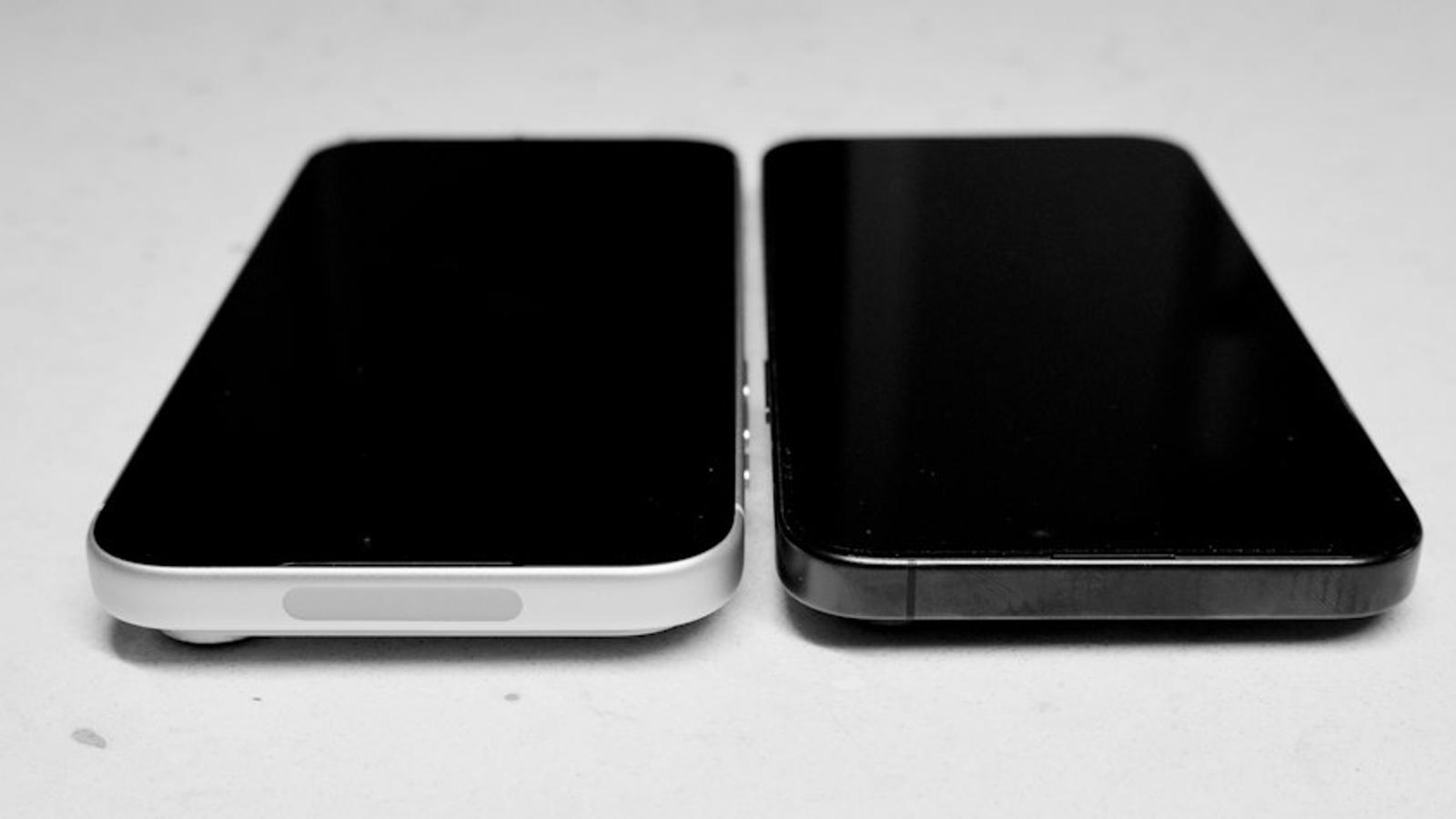
Apple maintained an identical physical envelope between the two generations, preserving an exact footprint across both handsets. Both the iPhone 18 Pro and iPhone 17 Pro measure 150.0 x 71.9 x 8.8 mm (5.91 x 2.83 x 0.35 in), retaining identical button placements and chassis contours.
Because external dimensions remain completely unchanged, existing protective cases designed for the iPhone 17 Pro fit directly onto the newer iPhone 18 Pro. This backwards compatibility spares returning buyers the expense of replacing premium cases, car mounts, and specialized accessories.
Despite identical dimensions, mass differs noticeably between the two units. The iPhone 18 Pro weighs 211 grams, representing a 5-gram gain over the 206-gram chassis of the iPhone 17 Pro. The subtle weight increase stems from enhanced internal components, an expanded vapor cooling infrastructure, and a larger internal battery pack.
In daily handling, this slight increase in mass remains largely negligible for most users. However, those sensitive to one-handed operation may perceive a marginally denser feel when holding the iPhone 18 Pro over prolonged reading sessions.
Refined Aesthetic Finishes and Color Treatments
To visually differentiate the generational hardware, Apple altered the exterior finish portfolio for the newer generation. The iPhone 18 Pro arrives in a refined palette featuring Black, Silver, Glacier, and an all-new Burgundy option serving as the designated hero finish.
By comparison, the outgoing iPhone 17 Pro retailed in Silver, alongside the striking Cosmic Orange and Deep Blue variants. The newer Glacier and Burgundy tones offer a more muted, understated aesthetic compared to the bold saturation of Cosmic Orange.
Beyond tint, surface treatments remain largely comparable across both generations, employing durable textured matte glass on the rear panel and an aerospace-grade titanium frame. Both finishes resist oily fingerprints effectively while maintaining tactile grip.
Selecting between these color offerings largely boils down to personal taste, though buyers fond of expressive hues like Cosmic Orange will need to seek out remaining iPhone 17 Pro retail inventory.
Display Dimensions and the Narrower Dynamic Island
Screen specifications on paper show widespread parity across both generations. Both devices feature a 6.3-inch 120Hz LTPO OLED display operating at a resolution of 1206 x 2622 pixels, delivering an identical pixel density of 460 ppi with adaptive ProMotion refresh rates ranging from 1Hz to 120Hz.
The key physical distinction on the front panel centers on the Dynamic Island cutout. Apple re-engineered the biometric Face ID sensor cluster, allowing the Dynamic Island on the iPhone 18 Pro to occupy a narrower physical footprint than on the iPhone 17 Pro.
By shrinking horizontally, the revised Dynamic Island frees up usable screen real estate along the top status bar. This reduction minimizes visual interruption when streaming widescreen video or reviewing complex documents.
Furthermore, Apple expanded the interface capability of the narrowed cutout. On the iPhone 18 Pro, the Dynamic Island can track up to three concurrent background activities simultaneously, improving upon the dual-item limit supported by the iPhone 17 Pro.
Display Luminance and Laboratory Measurements
While visual sharpness and color accuracy remain virtually identical, rigorous laboratory evaluations revealed a minor discrepancy in sustained display brightness. Standardized testing recorded a maximum peak luminance of 971 nits on the iPhone 18 Pro under controlled illumination conditions.
In contrast, the older iPhone 17 Pro registered a marginally higher peak brightness of 1012 nits under identical benchmark parameters. This represents an approximate 4 percent decrease in raw measurable peak output on the newer model.
In everyday outdoor environments, this minor luminance variance is practically indistinguishable to the human eye. Both panels cut through harsh direct sunlight comfortably, keeping interface typography, camera viewfinders, and maps easily readable.
Touch responsiveness and viewing angles remain top-tier on both screens. Off-axis color shifting is kept to an absolute minimum, ensuring an exceptional viewing experience regardless of which handset is in hand.
Architectural Leap: A20 Pro Versus A19 Pro
The fundamental hardware evolution occurs under the hood with the introduction of Apple's next-generation silicon. The iPhone 18 Pro runs on the cutting-edge Apple A20 Pro system-on-chip, fabricated on an advanced 2nm production node.
Conversely, the iPhone 17 Pro relies on the previous-generation Apple A19 Pro processor, which is constructed using a 3nm fabrication standard. The architectural transition from 3nm to 2nm represents a critical milestone in semiconductor efficiency and transistor density.
With smaller transistor gate lengths, the A20 Pro processes complex computations with lower thermal dissipation and reduced energy consumption. High-demand workloads like console-tier gaming or on-device ProRes video export trigger less thermal throttling over extended durations.
General UI interactions and app startup times feel exceptionally snappy on both phones, but the A20 Pro provides significantly broader headroom as developer software grows increasingly compute-intensive in coming years.
Neural Engine Core Expansion and On-Device Intelligence
Artificial intelligence workflows represent another pivotal divergence between the two silicon generations. The A20 Pro integrates an updated Neural Engine boasting twice the physical core count found within the A19 Pro of the iPhone 17 Pro.
Doubling the specialized neural processing matrix yields substantial throughput gains for generative computational tasks, real-time audio translation, predictive text engines, and advanced computational photography pipelines.
Because these complex machine learning models run natively on-device, the iPhone 18 Pro processes requests with reduced latency while preserving user privacy by avoiding external cloud round-trips.
The iPhone 17 Pro continues to support Apple Intelligence features smoothly, yet intensive multitasking involving localized model execution can cause the older chip to allocate resources more conservatively.
Base Memory and Storage Configurations
Hardware baseline parameters also witnessed a welcome standard upgrade on the newer generation. The iPhone 18 Pro ships with a baseline hardware configuration consisting of 256GB of onboard storage paired with 12GB of unified RAM.
This elevated operational memory ceiling is specifically tailored to support advanced on-device artificial intelligence architectures, which require persistent memory allocations to keep large language models loaded without evicting background apps.
For power users, 12GB of RAM ensures seamless multitasking between heavy creative applications like Final Cut Camera, photo editing suites, and complex productivity workspaces.
By starting at 256GB of storage, the iPhone 18 Pro also provides ample out-of-the-box capacity for capturing high-bitrate video, eliminating the immediate pressure to pay for higher storage tiers on launch day.
Battery Capacity and Screen-On Endurance
Battery capacity experienced a measurable capacity enlargement in the iPhone 18 Pro, moving from 3998 mAh on the iPhone 17 Pro to an expanded 4056 mAh lithium-ion cell.
While a 58 mAh difference may appear modest on paper, its benefits compound significantly when combined with the enhanced power efficiency of the 2nm A20 Pro platform.
Standardized battery endurance testing on units equipped with physical SIM card trays verified that the iPhone 18 Pro outperformed the iPhone 17 Pro across all active screen-on benchmark routines.
Evaluations covering continuous web browsing over 5G networks, continuous video playback, and cellular voice communications yielded a higher aggregate Active Use Score for the iPhone 18 Pro, solidifying its reliability as an all-day productivity workhorse.
Wired Charging Speeds and Power Profiles
Charging infrastructure also sees a notable performance leap between the two generations. The iPhone 18 Pro increases supported wired charging input to 45W, outstripping the 35W charging ceiling supported by the iPhone 17 Pro.
During standardized wired charging speed evaluations utilizing compliant high-wattage power adapters, the iPhone 18 Pro replenished 42% of its battery in just 15 minutes, compared to 40% on the iPhone 17 Pro.
At the 30-minute benchmark interval, the iPhone 18 Pro reached 74% capacity, whereas the older handset stood at 70%. The advantage becomes even clearer during the trickle-charge phase toward full capacity.
The iPhone 18 Pro completed a 100% full recharge cycle in 62 minutes, shaving a full 16 minutes off the 78-minute recharge duration recorded by the iPhone 17 Pro.
Acoustic Output and Speaker Performance
Speaker engineering represents an often-understated refinement in this comparison. Acoustic benchmark tests revealed that while fundamental frequency tuning and sound signature stay consistent across both generations, the iPhone 18 Pro outputs considerably louder volume than the iPhone 17 Pro.
Both devices utilize a hybrid stereo speaker configuration consisting of a bottom-firing driver combined with an amplified earpiece speaker. The iPhone 18 Pro, however, benefits from improved acoustic chamber dampening and refined amplification circuits.
Even when pushed to maximum output levels, the iPhone 18 Pro resists harmonic distortion, maintaining clean highs, crisp vocal clarity, and balanced low-end response.
This added acoustic headroom proves immensely valuable in noisy environments, such as speakerphone conference calls in bustling office spaces or media playback without external headphones.
Strategic Buying Recommendation and Next Steps
Choosing between the Apple iPhone 18 Pro and the iPhone 17 Pro depends on your current device ecosystem and performance priorities. If you are upgrading from an older handset like an iPhone 14 Pro or standard base model, the iPhone 18 Pro represents a formidable long-term investment courtesy of its 2nm A20 Pro silicon, doubled Neural Engine cores, 12GB of RAM, and accelerated 45W wired charging.
Conversely, current owners of the iPhone 17 Pro will find little urgency to jump to the newer generation immediately. The identical physical chassis dimensions, nearly indistinguishable 6.3-inch 120Hz display, and shared titanium build quality ensure that the previous-generation flagship remains exceptionally competent for years to come.
To determine the smartest path forward, check your carrier portal to evaluate current trade-in credits, or browse authorized retailer clearance listings to see if remaining inventory of the discontinued iPhone 17 Pro matches your budgetary targets.
Frequently Asked Questions About Upgrading to the iPhone 18 Pro
Can I use my existing iPhone 17 Pro case on the iPhone 18 Pro?
Yes. Both models share identical physical dimensions of 150.0 x 71.9 x 8.8 mm, meaning cases built for the iPhone 17 Pro fit the iPhone 18 Pro perfectly.
However, the iPhone 18 Pro is slightly heavier, weighing 211 g compared to the 206 g previous generation.
What are the main display differences between the two models?
Both devices feature a 6.3-inch 120Hz LTPO OLED panel at 1206x2622 resolution. However, the iPhone 18 Pro introduces a narrower Dynamic Island that supports up to three active live tasks.
Lab tests show peak brightness reaches 971 nits on the iPhone 18 Pro versus 1012 nits on the iPhone 17 Pro.
How much better is the battery life and charging speed on the iPhone 18 Pro?
The iPhone 18 Pro features a larger 4056 mAh battery compared to the 3998 mAh unit in the iPhone 17 Pro, delivering improved screen-on runtime.
It also charges faster, supporting 45W wired charging to complete a full recharge in 62 minutes versus 78 minutes at 35W on the older model.
Is it worth upgrading from the iPhone 17 Pro to the iPhone 18 Pro?
The iPhone 18 Pro upgrades to the 2nm A20 Pro chip with doubled Neural Engine cores, louder speakers, faster charging, and 256GB base storage.
For existing iPhone 17 Pro owners, the modest daily gains mean upgrading is optional unless AI tasks and faster recharges are top priorities.
Related articles