What to Do With an Old Graphics Card Instead of Throwing It Away
Learn practical ways to extract value from your aging graphics card. Whether you repurpose it for AI workloads, sell it secondhand, or recycle it for materials, do not let it become e-waste.
By Tradifox Editorial· 7 min read
This article was generated with AI from the sources it names. Report an error
PC enthusiasts traditionally cycle through graphics cards every three to five years, but persistent silicon inflation and soaring memory costs have altered that rhythm. Upgrading no longer feels like an automatic hand-me-down routine where older parts simply get tossed aside. With modern midrange hardware regularly commanding premium prices, holding onto prior-generation hardware and making practical use of it has become an essential consumer habit.
Discarding a functional piece of computer hardware wastes valuable engineering and hard-earned cash. A retired GPU still holds significant computing capability, whether you want to monetize it, reconfigure it for specialized tasks, or securely salvage its raw elements. Navigating these alternatives allows builders to recoup costs and minimize unnecessary electronic waste.
The Realities of the Modern GPU Market
Hardware market shifts have fundamentally altered the calculus around keeping older hardware. According to the Steam hardware survey, modern mainstream staples like the Nvidia GeForce RTX 5070 lead active adoption, appearing in 6.15 percent of surveyed systems as of late 2026. Yet that card, which carried an initial $549 launch price, frequently commands well over $800 due to compounding memory bottlenecks and manufacturing pressures.
Because recent upgrades carry such steep premiums, secondhand values across older hardware tiers remain surprisingly buoyant. Casual shoppers looking to assemble budget gaming desktops or replacement office machines routinely look to prior generations to avoid astronomical retail margins. This dynamic creates a favorable environment for anyone sitting on functional spare silicon.
Recent secondary market tracking reveals that used RTX 3060 models still trade near their original retail figures on marketplaces like eBay. Even decade-old hardware retains measurable utility, with working GTX 1060 cards originally sold at $249 reliably netting between $50 and $100. Rather than gathering dust on a closet shelf, these legacy units can directly fund your next system build.
Building a Dedicated Living Room or Emulation Box
If selling hardware online feels like more hassle than it is worth, repurposing an older card into a secondary machine offers an immediate performance payoff. A retired desktop GPU easily outclasses most basic integrated graphics, making it ideal for powering a compact living room PC connected straight to a television.
These secondary systems excel at running emulation frontends, classic PC titles, and legacy code libraries that struggle with newer driver architectures. Games from the DirectX 9 era frequently execute with fewer hitches on older hardware configurations. Freeing your main workstation from handling these casual sessions keeps your primary desk space tidy.
An auxiliary graphics card also supplies extra physical display outputs. If you need a reliable machine driving multiple high-resolution television panels or requiring dedicated HDMI and DisplayPort routing, an older card provides the necessary connectivity without demanding an expensive modernization cycle.
Adding a Secondary Card to Your Main PC
Another compelling option involves sliding the older card back into your current workstation alongside your primary GPU. While multi-card setups like SLI and CrossFire are long dead for standard gaming rendering, modern operating systems handle split graphical tasks with ease.
Before seating a second board, you must inspect your motherboard expansion slots and CPU specifications carefully. Many consumer platforms distribute bandwidth dynamically, meaning an extra PCIe card can trigger processor lane splitting that drops your main slot from sixteen lanes down to eight, potentially penalizing primary GPU throughput.
Ensure your power supply unit maintains adequate wattage and connectors to handle two distinct graphics boards simultaneously. Adequate case ventilation is equally critical, as adding a second hot component alters chassis airflow and raises ambient internal temperatures.
Offloading Streaming, Capture, and Frame Generation
When configured properly, a secondary GPU lifts mundane background processing away from your primary gaming engine. Rather than taxing your main card during competitive sessions, you can assign all real-time video encoding and streaming tasks to the secondary card through software like OBS Studio.
This setup also unlocks utility through specialized software like Lossless Scaling, a popular $6.99 utility available on Steam. Gamers can run frame generation algorithms on the auxiliary card while the primary card focuses entirely on native resolution rendering, boosting perceived motion fluidity.
Dedicated in-game capture becomes completely isolated from your core gaming workload. High-bitrate gameplay recordings can process smoothly across the secondary card's onboard media engines without introducing frame stutters or sudden input latency spikes into your active monitor.
Local AI Processing and Creator Workloads
Creative workflows and emerging developer tools place unique demands on hardware that do not always align with conventional gaming benchmarks. Software packages like DaVinci Resolve, Blender, and HandBrake can utilize secondary GPUs for rendering pipelines, background previews, and file exports.
Offloading format conversions or 3D rendering jobs to a standalone secondary GPU prevents your operating system from feeling sluggish. You can render out complex video sequences on the spare hardware while continuing to write code, browse the web, or edit photos uninterrupted on your primary display.
Machine learning applications also benefit significantly from spare hardware capacity. Running lightweight, local large language models or image generation pipelines requires dedicated video memory above all else. Even older cards with moderate compute capability offer enough VRAM to host local models securely without exposing private data to third-party cloud APIs.
Keeping a Tested Backup in Reserve
Hardware failures arrive without warning, often leaving users without display output when they least expect it. Modern troubleshooting can turn into an expensive guessing game if your desktop processor lacks integrated graphics capabilities.
Retaining your previous graphics card provides a reliable diagnostic baseline should your primary card suffer thermal throttling, artifacting, or component failure. Having a verified, working card tucked away eliminates weeks of downtime while waiting for factory warranty replacements.
Storage technique matters when setting hardware aside for long periods. Moisture, physical impact, and electrostatic discharge can quietly destroy delicate printed circuit boards. Always wrap the card in a verified antistatic bag, place it in protective packaging, and store it in a temperature-controlled, dry closet.
Sustainable E-Waste Recycling
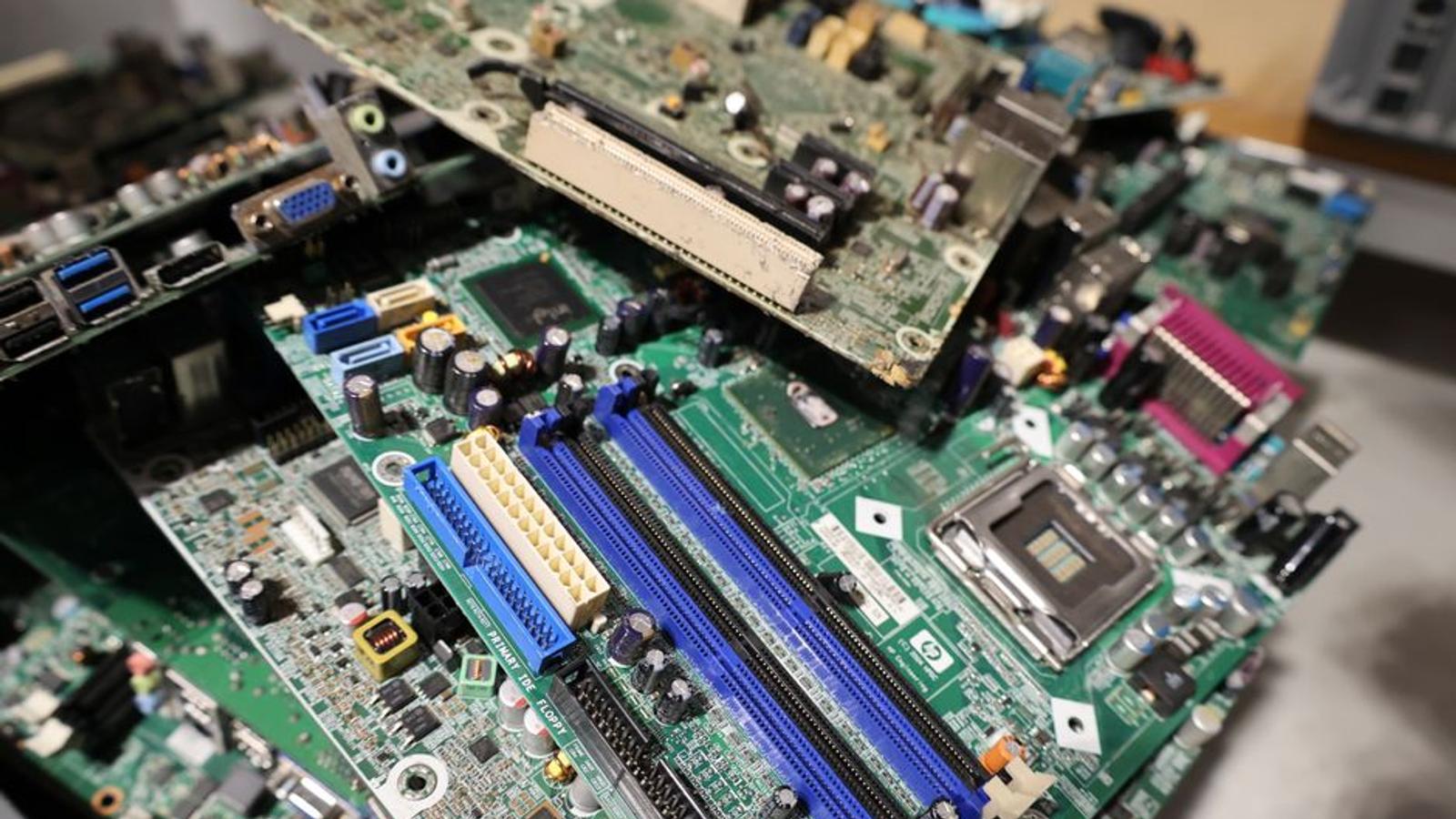
When a graphics card suffers blown capacitors, cracked silicon, or permanent trace corrosion, repurposing and resale cease to be viable paths forward. Tossing damaged circuit boards into household trash bins introduces toxic lead, brominated flame retardants, and heavy metals into municipal landfills.
Responsible electronic waste recyclers dismantle dead hardware to safely recover raw industrial materials. Modern circuit boards contain significant concentrations of copper, aluminum, and precious metals like gold on contact pins, all of which can be melted down and reintroduced into manufacturing supply chains.
Local electronics retailers and civic municipal depots often host free e-waste drop-off bins where you can leave broken components. Taking a few moments to direct non-functional silicon toward certified recycling partners ensures valuable materials stay in circulation while keeping toxic chemicals out of local soil and water.
Frequently Asked Questions About Repurposing Secondary Graphics Cards
Can your existing power supply handle adding a secondary graphics card?
Adding a secondary GPU requires substantial power supply headroom. You must account for the peak power draw of both cards plus system components. Running two cards on an underpowered PSU causes sudden system shutdowns or stability crashes under load.
How does PCIe lane splitting affect your primary graphics card performance?
Most consumer motherboards divide CPU lanes across slots. Installing a second card can reduce your primary slot from x16 to x8 bandwidth. While modern PCIe bandwidth minimizes frame rate loss, check your motherboard manual to ensure your primary GPU performance remains stable.
What is the proper method for storing an older graphics card long term?
Store backup cards inside dedicated antistatic shielding bags in a dry, temperature-controlled environment. Avoid standard plastic bubble wrap or cardboard boxes directly against the PCB, as electrostatic discharge can damage sensitive memory modules and capacitors.
How can a secondary GPU assist with background capture or scaling tasks?
Dedicated secondary GPUs can handle video capture pipelines or run the Lossless Scaling utility to generate frames independently. This offloads encoding or frame-generation overhead from your primary card without introducing input latency.
Related articles