How to Properly Clean Your Solar Panels (and Why It's Important)
Discover how and when to clean your solar panels safely. We break down the real-world efficiency gains of washing off dust and pollen, plus tips for avoiding costly damage to your rooftop investment.
· 10 min read
This article was generated with AI from the sources it names. Report an error
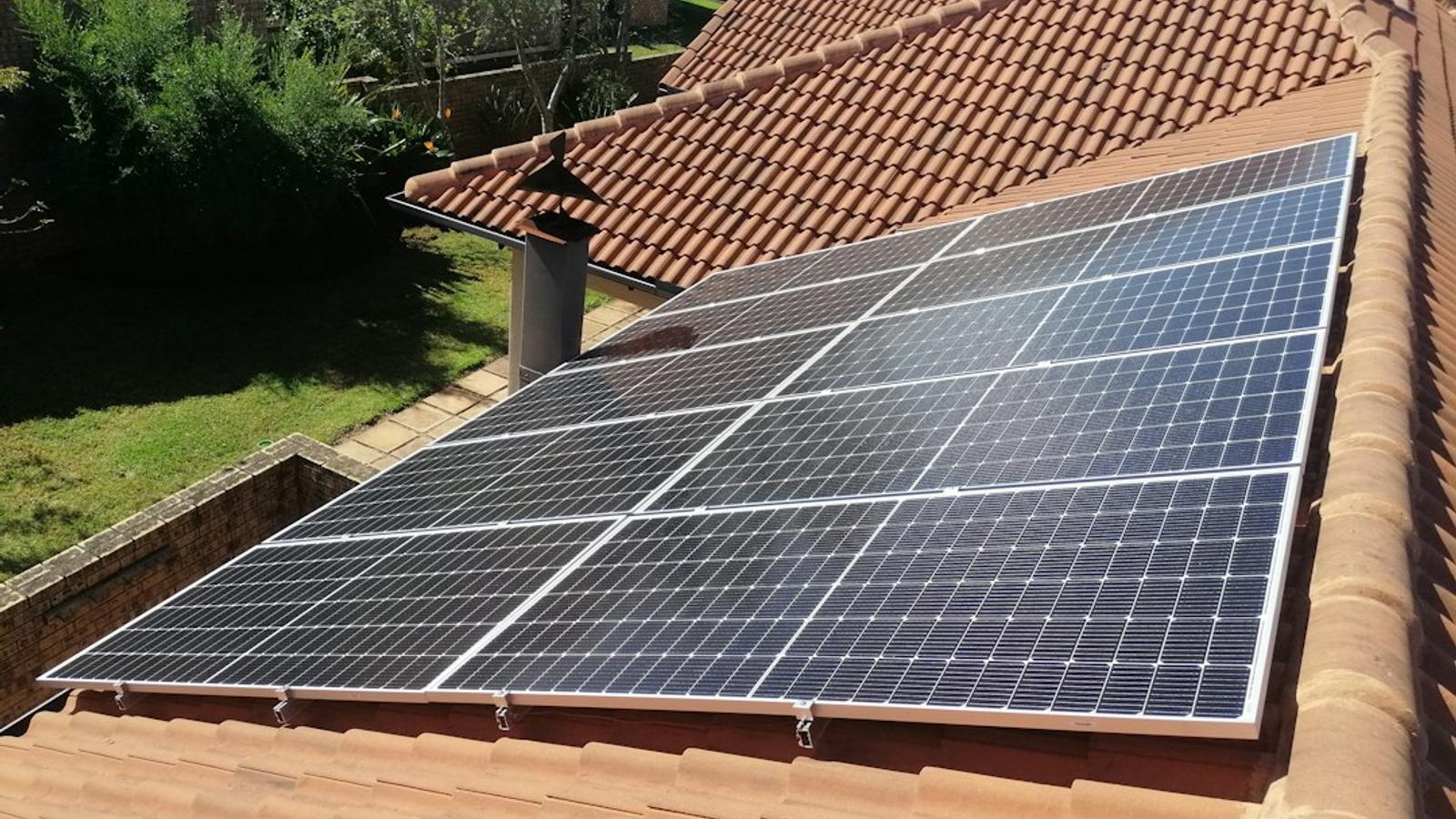
Rooftop solar panels spend decades exposed to outdoor elements, silently absorbing sunlight and converting photons into household electricity. Over months of continuous exposure, ambient dust, tree pollen, bird droppings, and industrial particulate accumulate across the protective glass surface. This layer of grime, technically known as soiling, prevents a portion of incoming solar irradiance from reaching the underlying photovoltaic cells. While it is intuitive to assume dirty glass demands immediate washing, deciding whether, when, and how to wash arrays requires balancing actual efficiency losses against labor costs, safety hazards, and equipment warranties.
According to findings published by the International Energy Agency Photovoltaic Power Systems Programme, soiling accounts for approximately four to seven percent of annual photovoltaic energy losses across global installations. In arid or agricultural regions where airborne particulate is dense and rain is rare, those losses can spike significantly higher. Conversely, in temperate climates with frequent, moderate precipitation, natural rainfall routinely rinses light dust away before meaningful power drops occur. Understanding the specific contaminants coating an array is essential before climbing a ladder or booking an expensive service call.
Quantifying Solar Efficiency Losses from Soiling
Not all contaminants behave equally on the glass surface of a solar module. A study conducted by the National Renewable Energy Laboratory examined multiple test sites in North Carolina and revealed that seasonal tree pollen reduced solar energy output by up to 15 percent. Natural rainfall proved insufficient to fully dislodge the sticky organic film, leaving stubborn residues behind. Only after technicians applied wet mechanical washing did the systems recover between five and 11 percent in generation capacity.
At the same time, baseline dust accumulation rarely causes the catastrophic power failures homeowners fear. Researchers at the University of California, San Diego monitored rooftop panels operating for 145 consecutive days without rain or manual cleaning, documenting an average efficiency decline of 7.4 percent. Interestingly, when the researchers modeled washing a standard 5kW residential array halfway through that extended dry spell, the resulting production boost produced only about $20 in additional electricity before autumn storms arrived. For most consumers, a thin film of uniform dust yields negligible financial drag.
Localized obstacles, however, introduce entirely different electrical problems than uniform layers of fine desert sand. Bird droppings, accumulated leaf debris, and caked organic matter selectively block individual solar cells within a single module. Because photovoltaic cells within a panel operate in series, shading a single cell limits current flow across the entire string and forces bypass diodes to activate. In severe situations, prolonged localized shading can generate hot spots, stressing internal solder joints and accelerating cell degradation.
Real-world performance testing highlights the wide variability of post-cleaning production gains across differing conditions. In one informal comparative experiment tracking three soiled 100-watt panels, washing produced output increases of 2.4 percent, 10.8 percent, and 13.4 percent respectively. Similarly, residential system owners have shared data showing substantial generation jumps after washing, though closer examination often reveals these figures stem from predictive inverter software rather than controlled baseline comparisons. Calculating true output changes requires benchmarking irradiance and temperature alongside power generation.
The Economics of Professional Cleaning Services
Determining whether to pay for third-party maintenance comes down to a straightforward comparison between utility bill savings and professional labor invoices. Data compiled by home-improvement platform Thumbtack indicates that hiring a professional solar panel cleaner costs an average of $209 nationwide. Actual quotes typically fluctuate between $142 and $310 per visit, influenced by roof pitch, array size, two-story access, and regional labor markets.
Economic models show that recovering that expense requires substantial, prolonged generation deficits. Suppose heavy dust buildup robs a homeowner of $20 per month in self-generated solar electricity, forcing the household to purchase that supplemental power directly from the grid. If professional washing costs $200, achieving a 10-month break-even payback requires that the same 20-dollar monthly generation loss persist completely uninterrupted for nearly a full year without any rainfall naturally clearing the array.
In many areas, seasonal rainstorms arrive every few weeks or months, essentially resetting the soiling baseline for free. Unless a property sits adjacent to an unpaved haul road, an active quarry, or agricultural farmland generating heavy particulate, hiring professionals multiple times a year is rarely justifiable from a pure return-on-investment perspective. Tracking generation logs through the solar inverter app offers the cleanest financial compass. If daily peak generation under clear skies mirrors historical seasonal averages, washing the array will yield minimal monetary return.
Professional services hold distinct advantages, however, when safety, roof pitch, or heavy localized fouling come into play. Climbing onto a steep two-story roof while handling water hoses and extension poles introduces significant fall hazards for inexperienced homeowners. Licensed maintenance crews carry dedicated liability insurance, harness gear, and specialized filtration rigs that strip minerals from tap water, eliminating streaks and keeping delicate rooftop electrical components safe.
Safe DIY Washing Practices and Operational Guidelines
For homeowners with single-story residences, low-slope roofs, or ground-mounted arrays, cleaning panels personally remains practical and affordable. The first rule of DIY solar maintenance is scheduling the work during early morning hours, late evening, or overcast days. Solar panels absorb immense thermal energy throughout sunny afternoons, driving internal cell and surface glass temperatures upwards of 150 degrees Fahrenheit. Spraying cold hose water onto scalding glass creates severe thermal shock, which can instantly crack the pane or fracture delicate internal silicon wafers.
Before introducing any moisture, a careful visual inspection of the installation is mandatory. Technicians advise inspecting the array from the ground or a secure ladder to check for cracked glass, dislodged junction boxes, or frayed wiring insulation. If any module glass is shattered or visibly cracked, adding water risks electrical short circuits, inverter tripping, and hazardous electric shocks. Damaged modules must be isolated, inspected, and repaired by certified solar electricians before any surface cleaning occurs.
When rinsing the array, homeowners should utilize low-mineral, deionized, or purified water whenever possible. Standard municipal tap water and private well water often contain high levels of dissolved calcium, magnesium, and carbonate minerals. If hard water evaporates on sunny glass, it leaves behind stubborn mineral scale and milky calcified deposits that block sunlight far more permanently than simple ambient dust. Utilizing an in-line garden hose deionizer filter prevents calcification and ensures a spotless finish.
Equipment choice plays an equally decisive role in protecting the structural integrity of the installation. High-pressure washers must never be aimed at rooftop panels, as intense water streams can penetrate watertight frame seals, crack silicon wafers, and shatter glass. Homeowners should rely on soft, non-abrasive microfiber wash mitts or gentle extension-pole brushes equipped with soft flagged bristles. Metal scrapers, wire brushes, abrasive scouring pads, and harsh chemicals must be avoided, as they permanently scratch glass and peel away specialized anti-reflective surface coatings.
Chemical Compatibility and Warranty Considerations
Homeowners frequently assume that heavy household detergents, automotive soaps, or ammonia-based window sprays will safely loosen grease and biological residues. In reality, panel manufacturers establish strict chemical guidelines to protect the delicate anti-reflective nano-coatings applied to solar glass. Major module manufacturers, including Qcells, explicitly warn that aggressive cleaning methods or unapproved chemical detergents can strip anti-reflective coatings, induce module delamination, and immediately void warranty protections.
Qcells notes that it deliberately avoids prescribing a universal cleaning frequency, recognizing that geographic location dictates environmental exposure. When cleaning becomes necessary, plain demineralized water remains the universally accepted starting baseline across all module manufacturers. If greasy exhaust residue, industrial fallout, or stubborn sap demands a cleaning agent, consult the module's technical manual first. Some manufacturers permit mild, diluted dishwashing liquid, specialized solar soaps, or modest mixtures of isopropyl alcohol, while strictly barring chlorine, bleach, acids, and caustic alkali solutions.
Beyond glass abrasion, chemical detergents introduce distinct secondary problems if not rinsed thoroughly. Soap residues leave an invisible electrostatic film across the glass surface that acts as a dust magnet once dry, accelerating soiling rates in subsequent weeks. Furthermore, runoff containing harsh surfactants can corrode aluminum mounting frames, degrade rubber module gaskets, and wash directly into residential rainwater harvesting barrels or decorative landscape beds.
Preserving the manufacturer's 25-year performance warranty means documenting any maintenance carefully. Homeowners who perform DIY cleaning should keep records of dates, inspect for physical defects beforehand, and ensure any cleaning agents comply strictly with brand warranty stipulations. If stubborn lichen, moss, or thick sap fails to loosen after gentle wiping with a soft sponge and mild soap, leaving the spot alone is far safer than aggressively scouring the module.
Automated Cleaning Systems and Modern Alternatives
Given the physical friction and potential safety risks of manual scrubbing, automated cleaning technologies continue to expand across residential and industrial solar sectors. For large-scale residential rooftops in arid climates, several manufacturers offer timer-controlled rooftop sprinkler setups. These systems connect to household water lines through dedicated filtration cartridges, periodically misting panels early in the morning to wash away dust before it hardens. While convenient, they require initial plumbing investments and ongoing filter replacements to avoid hard-water spotting.
In the commercial and utility-scale sector, water-free robotic equipment has emerged as the standard maintenance solution. Robotic systems engineered by firms like Ecoppia traverse expansive rows of utility-scale ground-mounted arrays totaling 50 megawatts and higher. These autonomous robots utilize soft microfiber wipers and controlled air currents to glide along module frames every night, sweeping away desert dust without consuming valuable municipal water or applying damaging mechanical pressure.
For residential system owners, the most pragmatic approach remains data-driven observation. Inverters and monitoring apps offer continuous, real-time insight into string voltage, daily kilowatt-hour yields, and comparative seasonal trends. Rather than climbing onto the roof whenever glass looks dusty from street level, owners should track production dips during prolonged dry spells or heavy spring pollen blooms. If output remains steady, the panels are doing their job, leaving rainfall to handle the cleaning at zero cost.
Frequently Asked Questions About Solar Panel Maintenance
How often do residential solar panels require cleaning?
Universal cleaning intervals do not exist. Incline angles and normal rain clear most uniform dust. Homeowners should track inverter output metrics and plan cleanings only when heavy pollen, bird droppings, or long dry spells cause noticeable drops.
What is the typical cost for professional solar panel washing?
Professional solar panel cleaning averages $209 nationally, typically spanning between $142 and $310. Array owners should compare these service fees against actual power recovery, as minor production losses may yield less value than the visit costs.
Why should homeowners avoid using hard water on solar arrays?
Standard tap water often contains high mineral concentrations that leave calcified residue when drying on hot glass. These deposits degrade light absorption over time. Using demineralized or low-mineral water prevents streak build-up and surface damage.
Can improper washing methods void solar equipment warranties?
Abrasive pads, harsh chemicals, or pressure washers can scratch anti-reflective coatings and cause delamination. Manufacturers like Qcells specifically exclude damage caused by improper cleaning practices from standard warranty protections.
Related articles