How the iPhone Duo's Camera Differs from the iPhone 18 Pro
Apple's new $1,999 foldable iPhone Duo introduces unique dual-screen photography tools, but trades away the iPhone 18 Pro's dedicated telephoto lens, variable aperture, and professional recording formats.
· 9 min read
This article was generated with AI from the sources it names. Report an error
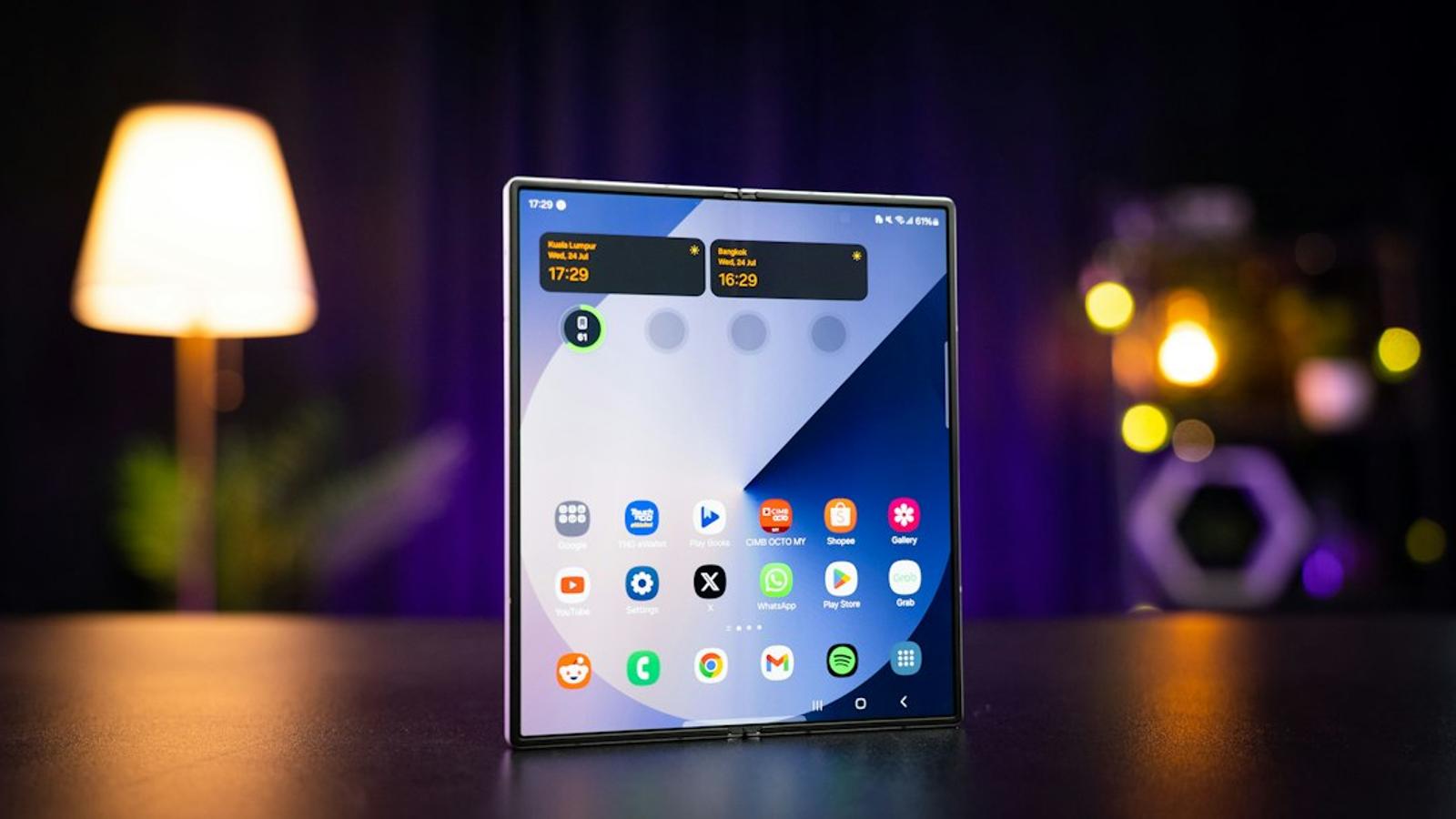
The $1,999 Hardware Dilemma
Apple's entrance into the foldable market with the $1,999 iPhone Duo marks a dramatic shift in how the company segments its mobile imaging technology. Traditionally, Apple's highest-priced flagship smartphone also served as its most capable camera system. With the iPhone Duo, however, physical engineering constraints require buyers to accept noticeable optical compromises compared to the iPhone 18 Pro.
Designing an ultra-thin folding device forces engineers to confront strict spatial limits. When folded flat, the Duo must remain pocketable, meaning all primary rear imaging sensors, lenses, and logic boards have to share space with battery cells inside a single half of the chassis. These structural realities directly dictated the Duo's hardware architecture, resulting in several key camera omissions.
Rather than outfitting the Duo with top-tier optical components, Apple prioritized portability and foldable utility. As a consequence, the iPhone Duo and the iPhone 18 Pro target entirely different photographic use cases. Understanding these structural tradeoffs helps determine which device suits your creative workflow.
Telephoto Zoom Capabilities Compared
The most conspicuous difference between the two devices is the complete absence of a dedicated telephoto camera module on the iPhone Duo. While the iPhone 18 Pro sports a triple-lens rear array, the Duo is limited to a dual-camera system consisting of a wide sensor and an ultrawide sensor. This leaves foldable owners without native optical magnification.
To achieve telephoto reach, the iPhone 18 Pro utilizes a dedicated 4x telephoto lens. Through advanced sensor-cropping techniques, the 18 Pro can further deliver an optical-quality 8x zoom at a crisp 12-megapixel resolution. This makes the standard Pro handset exceptionally versatile for wildlife, sports, and distant architectural framing.
In contrast, the iPhone Duo relies entirely on digital cropping from its primary 48-megapixel wide sensor. Because it lacks dedicated telephoto glass, the Duo tops out at a 2x optical-quality crop. Any attempt to zoom beyond 2x triggers standard digital interpolation, leading to noticeable softness and artifacting at longer focal lengths.
Mechanical Variable Aperture vs. Fixed Optics
Beyond reach, the fundamental optics on the primary cameras differ substantially. The iPhone 18 Pro introduces a mechanical variable aperture on its main lens. This mechanism physically expands or contracts internal blades to regulate incoming light and control native optical depth of field on the fly.
By physically altering its aperture, the iPhone 18 Pro allows photographers to achieve true optical background separation without digital assistance. In bright daylight, the aperture narrows to preserve edge-to-edge sharpness and avoid blown-out highlights. In low-light environments, it widens to gather maximum photons naturally.
The iPhone Duo does not possess this mechanical complexity, relying instead on a traditional fixed-aperture lens. To simulate depth, the Duo depends exclusively on software algorithms and machine-learning portrait segmentation. While computational blur has improved, it cannot fully replicate the nuanced roll-off and authentic bokeh created by physical blades.
Pro Controls and Post-Production Workflows
Professional mobile photographers will immediately notice significant software omissions when opening the Duo's camera interface. Apple equipped the iPhone 18 Pro with manual Pro Controls, allowing users to independently set shutter speed, white balance, ISO sensitivity, and aperture values. The Duo entirely omits these manual adjustments in favor of fully automated point-and-shoot capture.
Format support reflects an equally stark divide between the two handsets. The iPhone 18 Pro captures stills in uncompressed ProRAW and records high-bitrate video in ProRes, ProRes RAW, and Apple Log 2 color profiles. These industry-standard profiles provide colorists and editors with maximum latitude during post-production color grading.
None of these professional recording formats are available on the iPhone Duo. The foldable device is restricted to standard HEIF and JPEG still image formats alongside standard HEVC video. Apple clearly positioned the Duo away from cinema-grade production workflows and toward casual media consumption.
Spatial Capture and Security Verification
The divergence between the two camera stacks extends into emerging spatial and security technologies. The iPhone 18 Pro features optimized lens spacing that enables the capture of spatial photos and spatial videos. These three-dimensional media assets can be played back natively with realistic depth on visionOS hardware.
Because the iPhone Duo features an alternate lens geometry and internal spacing, Apple did not include spatial capture capabilities. Users looking to build a library of immersive 3D memories for virtual headsets will find the foldable device unable to record in these formats.
Furthermore, the iPhone 18 Pro introduces Apple's Reference Image security feature, which embeds cryptographically signed sensor metadata into each photo. This provides verifiable proof that an image was captured by genuine sensor glass rather than generated by artificial intelligence. The Duo lacks this hardware-level authentication pipeline entirely.
Auxiliary Hardware: Stabilization, Flash, and Audio
A close inspection of auxiliary hardware shows that Apple trimmed components across the Duo's build. For motion stabilization, the Duo relies on a previous-generation sensor-shift system. The iPhone 18 Pro employs a modern second-generation sensor-shift system capable of compensating for sharper hand movements and prolonged night exposures.
Illumination and audio recording tell a similar story. The iPhone 18 Pro utilizes an Adaptive True Tone flash that adjusts its focal pattern based on subject distance, paired with a studio-quality four-microphone array with spatial audio zoom. The Duo makes do with a static, non-adaptive flash unit and fewer microphones, resulting in flatter lighting and less isolated audio capture.
Unique Foldable Shooting Modes on the Duo
Where the iPhone Duo falls short in optical components, it compensates by leveraging its flexible, dual-screen form factor. By partially folding the hinge between 45 and 90 degrees, the device effectively turns into its own built-in tripod. Users can rest the handset on any flat surface to execute steady long exposures, night shots, or time-lapses without additional accessories.
Apple developed several software features exclusively tailored to the Duo's hardware design. Smart Take uses on-device vision models to monitor group framing, automatically snapping the shutter once everyone enters the frame and smiles. This removes the hassle of setting manual self-timers and rushing into place.
Family photography also benefits from Kid Cue, a dedicated mode that displays animated Peanuts characters across the outer cover screen while shooting. The moving visuals capture a young child's attention, directing their gaze straight toward the rear camera module to yield engaging, natural portraits.
Video conferencing receives an upgrade through Duo FaceTime. By activating the external display during a call, the user can pull a second nearby person into the conversation via the secondary screen, creating a dynamic, dual-perspective video call that single-screen phones cannot replicate.
Viewfinder Versatility and Front-Facing Cameras
Selfie framing is arguably the Duo's biggest operational advantage over the iPhone 18 Pro. Traditional smartphones force users to choose between a lower-quality front selfie camera and shooting blind with the primary rear lenses. The Duo solves this dilemma completely through its dual-screen exterior.
When unfolded, the iPhone Duo can activate its exterior cover display as a real-time viewfinder. This setup enables users to frame and capture self-portraits using the main 48-megapixel camera and ultrawide sensor, delivering detail, dynamic range, and color depth that easily surpass conventional front-facing cameras.
For standard video calls, the Duo includes a 12-megapixel punch-hole sensor on the outer cover screen and an under-display 1080p camera on the large folding panel. While the under-display unit suffers from minor softness due to the screen layer above it, having three distinct camera vantage points offers unprecedented flexibility.
Shared Baseline Imaging Features
Despite the clear hardware divides, both devices share a common imaging foundation powered by Apple's latest image signal processing. Both smartphones capture standard photos at default 24-megapixel resolution for a balance of detail and file efficiency, with full 48-megapixel raw output available when maximum resolution is required.
Macro capabilities remain identical across both handsets. Utilizing the 48-megapixel ultrawide lens, both the Duo and the iPhone 18 Pro can lock focus mere centimeters from tiny subjects to produce rich, high-resolution close-ups. Both models also include Apple's adjustable portrait depth rendering for post-capture refocusing.
Video parity is similarly preserved across core consumer formats. Both phones record buttery-smooth 4K Dolby Vision HDR footage at up to 120 frames per second. Furthermore, both models feature the latest generation of Photographic Styles, complete with interactive control pads for customizing color tone, image grain, and micro-texture.
Making the Right Choice
The choice between the iPhone Duo and the iPhone 18 Pro ultimately comes down to physical utility versus optical supremacy. If your priority is professional-grade focal range, manual exposure controls, ProRes recording, and spatial media capture, the iPhone 18 Pro remains the undisputed tool for serious creators.
Conversely, the iPhone Duo represents a compelling vision for lifestyle photographers who value versatile hands-free shooting, high-resolution rear-camera selfies, and innovative software features over raw telephoto power. If you are debating which device fits your budget and creative requirements, explore our comprehensive flagship smartphone comparison guides and interactive buying tools today to make an informed upgrade decision.
Frequently Asked Questions: iPhone Duo vs. iPhone 18 Pro Camera Differences
How do the zoom capabilities compare between the iPhone Duo and the iPhone 18 Pro?
The iPhone 18 Pro includes a dedicated 4x telephoto camera that crops to 8x optical quality at 12MP.
Because the iPhone Duo lacks a telephoto lens entirely, it relies solely on cropping its 48MP main sensor, physically limiting users to 2x optical-quality zoom.
Does the iPhone Duo support professional video codecs like Apple ProRes and Apple Log 2?
Apple omitted professional formats from the iPhone Duo to streamline its software.
While the iPhone 18 Pro supports ProRes, ProRes RAW, Apple Log 2, and ProRAW stills, the Duo lacks these recording codecs alongside manual Pro Controls for shutter speed and white balance.
Why does the more expensive iPhone Duo have fewer camera features than the iPhone 18 Pro?
Severe internal space constraints inside the foldable chassis forced Apple to make tradeoffs.
Fitting batteries and imaging hardware into an ultra-thin folding half left no room for telephoto optics, mechanical variable aperture assemblies, or second-generation sensor-shift stabilization.
What unique camera features does the iPhone Duo offer over the iPhone 18 Pro?
The folding form factor acts as a built-in tripod and enables active cover-screen framing for 48MP rear-camera selfies.
It also adds exclusive software tools like Smart Take automated group shots, Kid Cue Peanuts animations, and Duo FaceTime dual-screen calling.
Related articles