Apple HomePod Mini 2 vs Mini: Key Upgrades and Price Comparison
Apple's HomePod mini 2 introduces the S10 chip, paving the way for Siri AI and Apple Intelligence integration. We break down the new computational audio features and the $50 price increase over the original.
· 10 min read
This article was generated with AI from the sources it names. Report an error
Evaluating the Generational Shift
Apple's update to its smallest smart speaker marks a distinct change in the company's product philosophy for home audio. The HomePod mini 2 arrives several years after its predecessor, introducing core architectural changes while keeping the established physical footprint largely intact. Rather than overhauling the acoustic hardware, Apple focuses on silicon advancements, ecosystem integration, and ambient software features.
The original HomePod mini entered the market as a cost-effective entryway into Apple's smart home ecosystem, emphasizing compact sound and basic voice commands. In contrast, the second-generation model arrives with a $50 price increase, reflecting a repositioning of the hardware. The speaker is no longer simply an entry-level audio accessory, but a connected processing node designed to leverage modern Apple Intelligence workflows.
For current owners and prospective buyers, this price delta alters the purchasing calculus significantly. Evaluating whether the new model justifies the higher price tag requires examining how internal silicon upgrades, computational processing, and ecosystem features alter daily performance. The differences lie not in raw decibels, but in processing capability, setup flexibility, and responsive intelligence.
Silicon Architecture and Processing Power
The most fundamental technical change inside the HomePod mini 2 is the processor driving the unit. The original HomePod mini relied on the Apple S5 system-in-package, which first debuted in the 2019 Apple Watch Series 5. While the S5 capably handled fundamental audio processing and basic Siri queries, its processing ceiling limited broader device capabilities.
Apple replaces that aging architecture with the modern Apple S10 processor in the HomePod mini 2. This represents a substantial leap in silicon performance, equipping the compact speaker with significantly higher computational bandwidth and enhanced machine learning efficiency. The extra headroom allows the unit to execute complex audio tasks while managing expanded wireless communication pipelines.
The S10 chip also serves as the operational foundation for Apple's incoming conversational intelligence architecture. The original speaker lacked the memory bandwidth and processing capacity to handle modern contextual models, restricting it to legacy voice control frameworks. With the S10, the HomePod mini 2 gains the hardware runway required to support upcoming software features across its lifecycle.
Computational Audio vs. Physical Acoustic Hardware
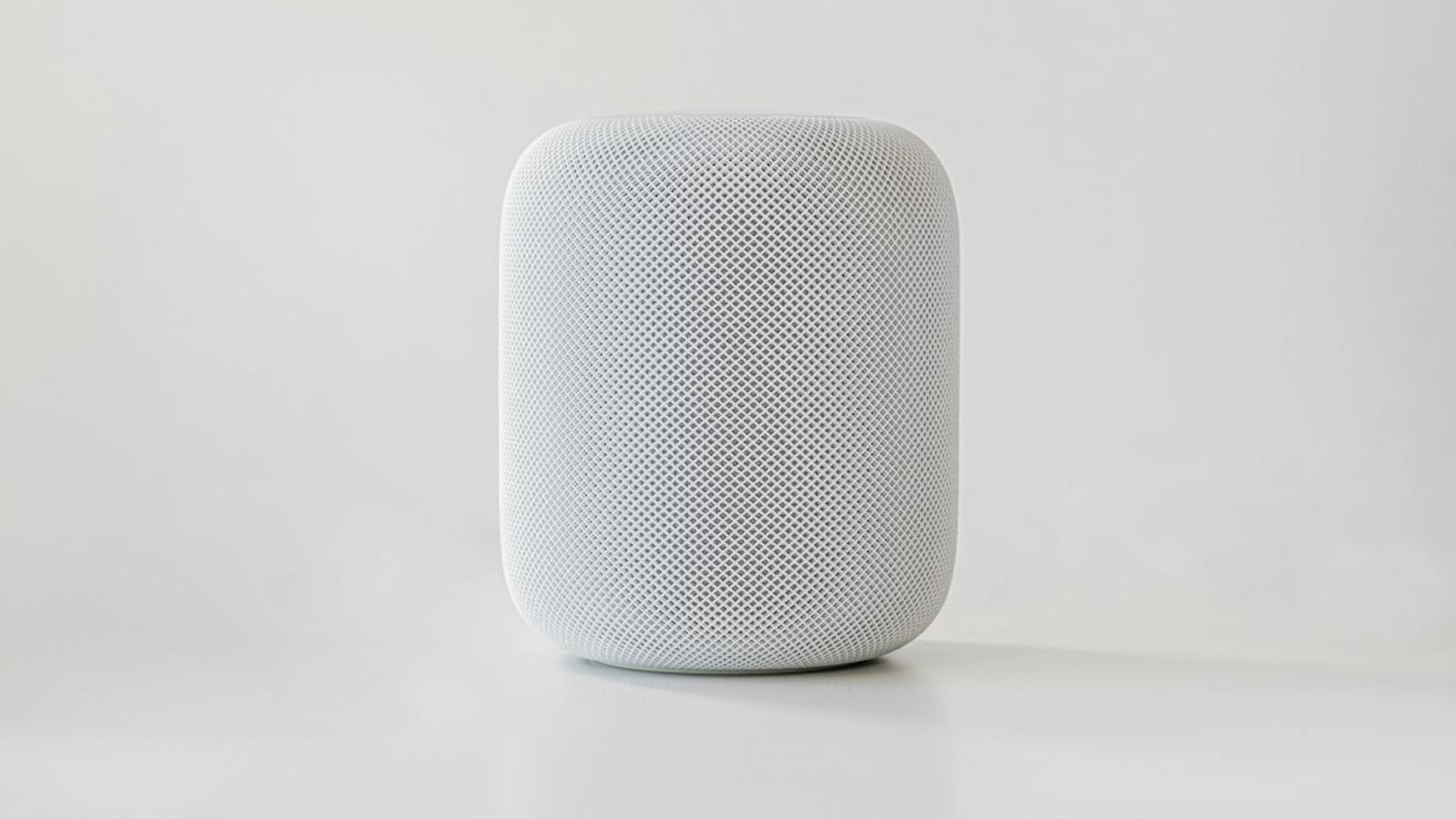
When examining sound reproduction, Apple made no mention of redesigned acoustic drivers, passive radiators, or enlarged enclosures for the second-generation speaker. The physical sound delivery mechanism remains virtually identical to the original version, utilizing a single full-range driver suspended between dual force-cancelling passive radiators. Those expecting larger physical woofers or altered driver geometry will find the same compact hardware.
Instead of analog acoustic modifications, Apple relies almost entirely on the S10 processor to advance computational audio. The new chip analyzes audio signals in real time, applying advanced tuning models to control driver excursion, frequency balance, and dynamic range. This approach extracts higher fidelity, reduced distortion, and clearer vocal separation from the existing physical enclosure without requiring larger hardware.
Computational tuning also improves high-volume stability, preventing the bass roll-off and harsh treble peaks common in small-format speakers. By running dynamic equalization models thousands of times per second, the S10 ensures consistent acoustic balance across varied music genres. The resulting sound profile offers noticeable clarity enhancements, though overall volume and low-end extension remain constrained by physical dimensions.
Sound Glow and Visual Feedback
Visual feedback receives its first major functional overhaul since the line launched through the introduction of Sound Glow. The original HomePod mini featured a backlit touch surface that displayed a static, swirling light orb whenever Siri was actively listening or processing a request. Outside of voice interactions, that interface remained dark, serving merely as a capacitive volume control.
Sound Glow transforms this touch-sensitive glass surface into an active visual accompaniment for media playback. The system dynamically syncs glowing light patterns with the rhythm, bass impact, and high-frequency elements of currently playing audio tracks. Additionally, the lighting array shifts its palette to reflect the primary hues of the active album artwork.
This aesthetic feature comes with specific ecosystem requirements that underline Apple's broader integration strategy. To utilize Sound Glow's artwork color-matching and reactive lighting, the HomePod mini 2 must be connected with an iPhone or iPad running Apple Intelligence. Without a compatible host device active on the local network, the visual interface defaults to standard volume and status illumination.
Siri AI and Apple Intelligence Integration
The introduction of the S10 chip brings Siri AI capabilities to the HomePod product line for the first time. However, buyers should note that this next-generation voice architecture is not fully operational out of the box at launch. Apple has scheduled the wider rollout of these expanded Siri AI capabilities to arrive via software updates later in 2026.
Once active, Siri AI promises to significantly alter how the speaker parses ambiguous natural language requests and contextual instructions. Instead of requiring precise syntax, the assistant will interpret conversational queries, handle multi-step tasks, and maintain context across consecutive interactions. This represents a vital step forward from the relatively rigid command structure of the first-generation speaker.
Personalized intelligence retrieval also relies heavily on cross-device processing within the home. To surface specific information from personal emails, calendar events, messages, and reminders, the HomePod mini 2 communicates with a connected iPhone or iPad running Apple Intelligence. The speaker functions as a localized audio gateway, drawing processed personal context securely from the user's primary Apple devices.
Surround Sound and Home Theater Integration
Multi-channel audio capabilities see expanded support in the HomePod mini 2, positioning the compact device as a modular component for home entertainment. In the previous generation, users were limited to pairing two identical mini units for stereo playback alongside an Apple TV 4K. While functional, that setup lacked true multi-channel surround sound routing.
With the updated model, Apple allows users to configure a complete surround sound environment using the latest Apple TV hardware. Homeowners can link four separate HomePod mini 2 units simultaneously to create front and rear channel separation. Alternatively, users can combine a pair of HomePod mini 2 units as rear surrounds with two full-size HomePod 2 speakers serving as primary front channels.
This modular approach gives users an adaptable path toward multi-channel television audio without dedicated audio-video receivers or physical speaker wiring. While it cannot fully match dedicated wired surround systems with separate subwoofers, the arrangement provides an accessible home theater configuration for medium-sized spaces.
Spatial Calibration and Positioning
Managing acoustic performance in irregular living spaces is simplified through automated room calibration. The HomePod mini 2 uses its internal microphone array and the S10 processor to detect its physical orientation relative to surrounding walls, furniture, and room boundaries. This monitoring happens automatically without requiring manual room-scanning routines using a phone.
Once the speaker determines its acoustic placement, computational algorithms adjust the audio output profile to compensate for boundary reflections. If placed against a wall or enclosed within a bookshelf, the speaker attenuates unnatural low-end resonance while preserving mid-range vocal clarity. When positioned in open space, the tuning adjusts to maintain even, 360-degree dispersion.
In multi-speaker setups, this spatial awareness ensures consistent timbre across all connected nodes. Whether operating as a desktop stereo pair or as rear surround satellites, the speakers calibrate output levels relative to one another. The automatic adjustment minimizes manual calibration while optimizing sound staging across various room layouts.
Mac Desktop Integration and Latency Improvements
Desktop audio integration represents another distinct functional improvement over the original model. Historically, utilizing original HomePod mini speakers as Mac audio outputs introduced frustrating transmission latency, leading to noticeable audio-video synchronization lag during video editing, gaming, and conferencing.
The HomePod mini 2 addresses these workflow limitations through improved low-latency wireless transmission when paired with compatible Mac computers. Users can designate a stereo pair of HomePod mini 2 speakers as their default system audio outputs with minimal transmission delay. This makes the compact speakers viable for daily computer audio, video streaming, and system feedback.
Furthermore, Mac integration expands into communications by utilizing the speaker's internal hardware. Users can route FaceTime and video conferencing audio directly through the HomePod mini 2 while utilizing the speaker's high-sensitivity microphone array for voice capture. Advanced beamforming filters background noise, allowing the speaker to function effectively as a dedicated desktop speakerphone.
Industrial Design, Colors, and Environmental Impact
From an exterior perspective, the HomePod mini 2 retains the recognizable spherical silhouette covered in seamless acoustic mesh fabric. The compact footprint ensures that the device fits easily on nightstands, kitchen counters, and narrow office desks without occupying excessive space. The familiar form factor also ensures compatibility with third-party mounting brackets and wall stands designed for the previous generation.
Apple offers the updated speaker in five distinct colors: white, black, pink, green, and blue. The inclusion of true black replaces the earlier 'space gray' and 'midnight' tones, offering a deeper, uniform shade across the mesh and power cable. The remaining pastel options allow buyers to match the hardware to diverse interior decoration themes.
Material sustainability remains central to the physical construction of the enclosure. The seamless acoustic fabric is crafted from 100 percent recycled polyester, and the internal acoustic magnets utilize recycled rare earth elements. Apple continues to eliminate external plastic packaging, shipping the speaker in compact, fiber-based boxes designed to reduce overall logistical emissions.
Comparative Value Analysis and Buying Verdict
The $50 price increase establishes a higher barrier to entry for prospective buyers evaluating Apple's smart speaker lineup. For consumers simply seeking a basic AirPlay 2 target or a background music player for a laundry room, the original HomePod mini or secondary-market units remain practical alternatives. The core audio output for straightforward playback does not diverge drastically enough on its own to warrant an immediate upgrade for existing owners.
However, the value equation shifts favorably for users invested in modern Apple workflows and unified home audio setups. The S10 processor provides longevity, ensuring the speaker remains compatible with Apple Intelligence and Siri AI developments rolling out through 2026. For those building modular surround sound systems with Apple TV or upgrading Mac desktop audio, the technical enhancements deliver tangible utility.
Ultimately, the HomePod mini 2 transforms what was once an auxiliary smart speaker into an integral hardware hub. Its computational headroom, lower wireless latency, and multi-channel flexibility justify the adjusted price for ecosystem power users. Buyers looking forward toward connected smart home intelligence will find the second-generation model a capable and future-ready addition.
Frequently Asked Questions: Apple HomePod Mini 2 Pricing and Features
Why is the Apple HomePod mini 2 priced fifty dollars higher than the original model?
The HomePod mini 2 costs $50 more than the original model. Apple justifies the premium with an upgraded S10 chip, advanced computational audio tuning, automatic spatial calibration, and deep integration with upcoming Siri AI features.
When will Apple roll out the new Siri AI capabilities for the HomePod mini 2?
Siri AI will not be active when the HomePod mini 2 launches. Apple plans to release the AI update later in 2026, meaning initial buyers will use standard Siri capabilities until the software rollout begins.
Do you need an Apple Intelligence device to use all the new features on HomePod mini 2?
Yes. Accessing personal data like emails, reminders, and calendar entries requires pairing with an iPhone or iPad supporting Apple Intelligence. The Sound Glow visual lighting feature also requires an Apple Intelligence-compatible device.
Is upgrading from the original HomePod mini to the HomePod mini 2 worth the money?
Upgrading makes sense if you want to create multi-speaker home theater setups, use low-latency Mac audio, or prepare for Siri AI in 2026. However, existing units still suffice for simple music playback since acoustic hardware remains largely unchanged.
Related articles